This is a question that Seth Godin, one of my influences, often asks to help professionals get to the core of the change they are trying to create. This simple question has the power to clarify, shake off excessive business input and open up to specific action. I have a recent non-business example:
I keep a bowl of miscellaneous Legos handy to corral my focus when the mind gets fidgety. So on this one afternoon, I thoughtlessly started creating a Lego structure to redirect my mind and very quickly realized that not only was my structure uninspired, it was outright hideous and pointless. My mind was elsewhere and, with my lack of intention, I ended up creating this black and grey blob of nothingness. Everything about it felt unappealing including the colors, shapes and purpose. There wasn’t an ounce of me that was interested in observing its details or making it better.
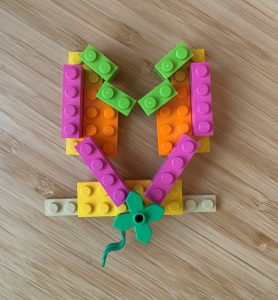
I dismantled it and decided to create something joyous for the second round; “perhaps a heart” I thought. Since I have a limited selection, I didn’t know how I was going to create this heart. I just knew I was going to do it with whatever was available. This intention made me dig in and look for the right pieces and explore shapes, colors and movement. I made a heart with valves that could move a bit and then I planted a little “flower flag”, because…why not! I had so much fun in the second round while exploring the pieces and connecting them in ways I hadn’t imagined in the first round. The colors and shapes felt appropriate. The heart looked a little bit like an upturned house so I took it to Tim (my husband), to see if he could decipher. He instantly said “I love you too”. So there—mission accomplished, heart joyous and mind corralled. The same pieces, the same me but the intention provided me a focus that completely shifted the outcome and the experience of creation.
Asking “what is it for” can help us answer a cascade of contextually important questions: why am I doing this, who is it for, why does this exist? It also helps in focusing the work, addressing uncertainty and inviting creative solutions.
“If you’re committing to the process, you’ll need to choose. Choose who it’s for and what it’s for. And the more different the person you serve is from you, the more empathy you’ll need to create the change you seek to make.” ― Seth Godin